
Hartford County Sex Offender Checks
The Connecticut Sex Offender Registry is administered statewide by the DESPP Division of State Police Sex Offender Registry Unit. Hartford County has no sheriff and no separate county registry. Use the state search for Connecticut names, towns, ZIP codes, and addresses. The registry is a safety-notification product, not a general rap sheet.
Public profiles may show a home address, photograph, physical description, conviction crimes, and registration details. Update timing matters. A listed person is not automatically presently dangerous, and an empty result cannot guarantee safety.
DESPP Hartford County Registry Search
The vendor-hosted DESPP tool requires acceptance of its disclaimer. Official descriptions support last-name, town, ZIP, and address research. Search more than one way when a recent move, spelling, or town boundary could affect a match.
DESPP also offers email notifications. Save the source and date of a result because registry information can change. Report an apparent compliance issue through official channels instead of drawing a conclusion from one screen.
Location searches need care in a region with many close municipal borders. A Hartford postal address, a West Hartford street, and another nearby town can lead to different town filters. Try the full address route, then check the ZIP and municipality. A name search can help confirm whether the same public profile appears through each path. Do not rely on a county label alone because Connecticut's old counties no longer operate as local governments.
Connecticut Sex Offender Registry Searches
Open the official Connecticut Sex Offender Registry and read its conditions. Use several public fields to distinguish people with similar names.
- Open the DESPP search and accept its conditions of use.
- Choose last name, town, ZIP, or the Connecticut address route.
- Compare the photograph, description, address, and conviction information.
- Open the profile and note its published status and registration details.
| Field Label | Type | Required | Notes |
|---|---|---|---|
| Last Name | Text | Route dependent | Named Connecticut search |
| Town | Location | No | Municipality filter |
| ZIP | Number | No | Useful near town lines |
| Address | Location | Address route | Use DESPP for Connecticut geography |
| Email Alert | Notification | No | Monitors published changes |
Hartford County NSOPW Limits
The U.S. Department of Justice national registry search supports name and cross-state research. Its form accepts first and last name, or ZIP, with optional city, town, county, and jurisdiction controls.
Connecticut does not provide geographic coordinates to NSOPW. Connecticut registrants are therefore absent from its address-radius results. Use DESPP for a Hartford County radius search.
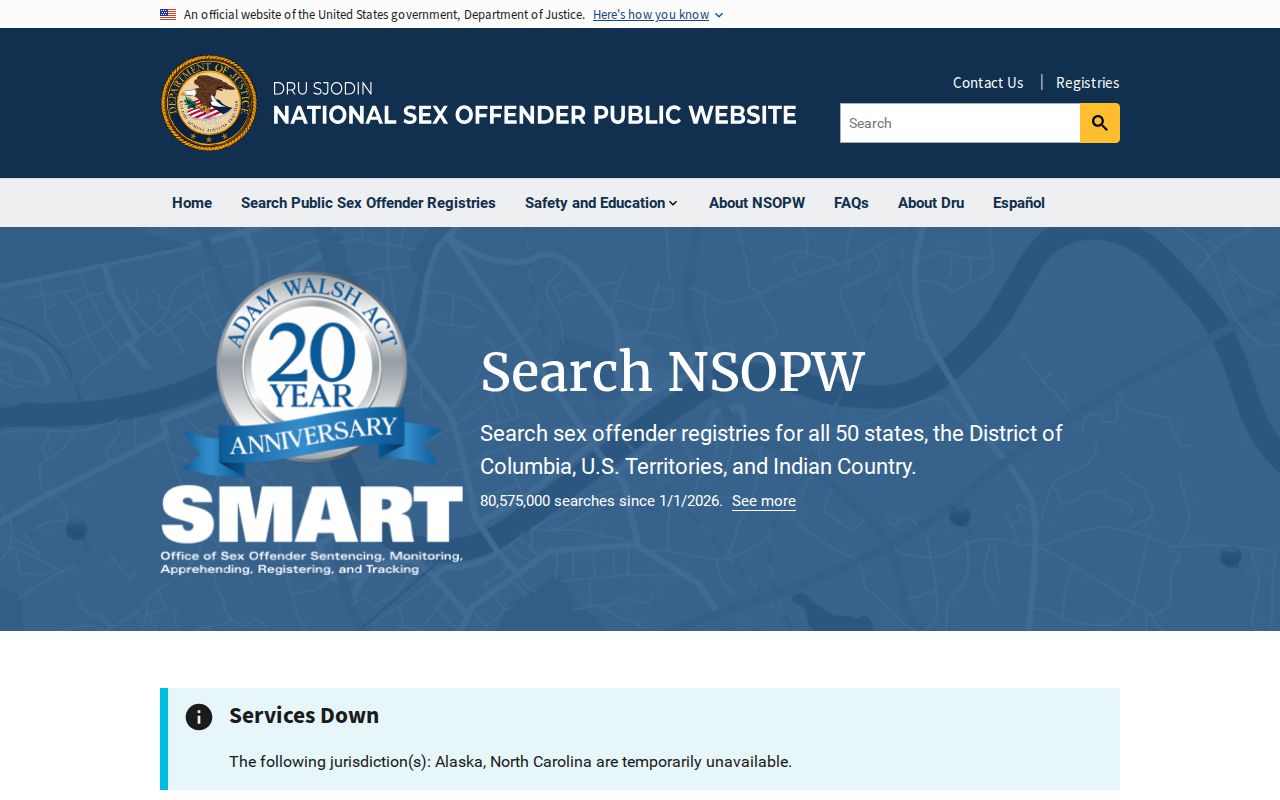
The national portal broadens state coverage but does not replace Connecticut's location tool.
Registry Profiles: What They Show
A Hartford County result is a registration notice shaped by Connecticut law. It is not the full police report, court file, or SPBI conviction history. Some facts remain private to protect victims and other interests.
| Name & Aliases | Published identity terms. |
|---|---|
| Photo & Physical Description | Traits for identity comparison. |
| Registered Address | The public home address reported through registration. |
| Conviction Crime | Qualifying conviction information. |
| Registration Duty | Statutory information, not a simple public risk score. |
| Published Status | Current displayed information, subject to update timing. |
No Hartford County Risk Tier
Connecticut does not publish a simple Level 1, 2, or 3 risk score for each registrant. Do not import another state's labels. Duration depends on the qualifying statute and case facts under §§54-251 through 54-253.
A court may restrict dissemination under §54-255 in certain cases, including when publication would likely identify a victim and public safety does not require it.
This distinction changes how a Hartford County profile should be read. A ten-year duty is not a low-risk label, and a lifetime duty is not a current clinical risk assessment. The public record reflects a legal registration obligation tied to a qualifying conviction. For the criminal case outcome, use the Connecticut Judicial docket and the court that handled the matter. For a personal Connecticut conviction-history product, use SPBI and CCHRS. Neither source should be silently substituted for the registry's public-notification role.
Registration Levels and Duties in Connecticut
Connecticut law sets ten-year or lifetime duties for the categories defined in §§54-251 through 54-253. The statute and individual case control. Registration is through the DESPP Unit, not a Hartford County office.
| Level / Tier | Duration | Verification Frequency |
|---|---|---|
| Ten-year duty | Ten years when the statute provides | As DESPP and law require |
| Lifetime duty | Life when the statute provides | As DESPP and law require |
| Restricted dissemination | Case-specific order | Not a public risk tier |
The Unit is at 1111 Country Club Road, Middletown, open Monday through Friday from 9 a.m. to 3 p.m., and reached at (860) 685-8060. Initial in-person registration is generally due within three days after release, or without undue delay and within five business days for qualifying arrivals from another jurisdiction.
Hartford County Registry Law Sources
Connecticut's official registration statutes govern duties and dissemination.
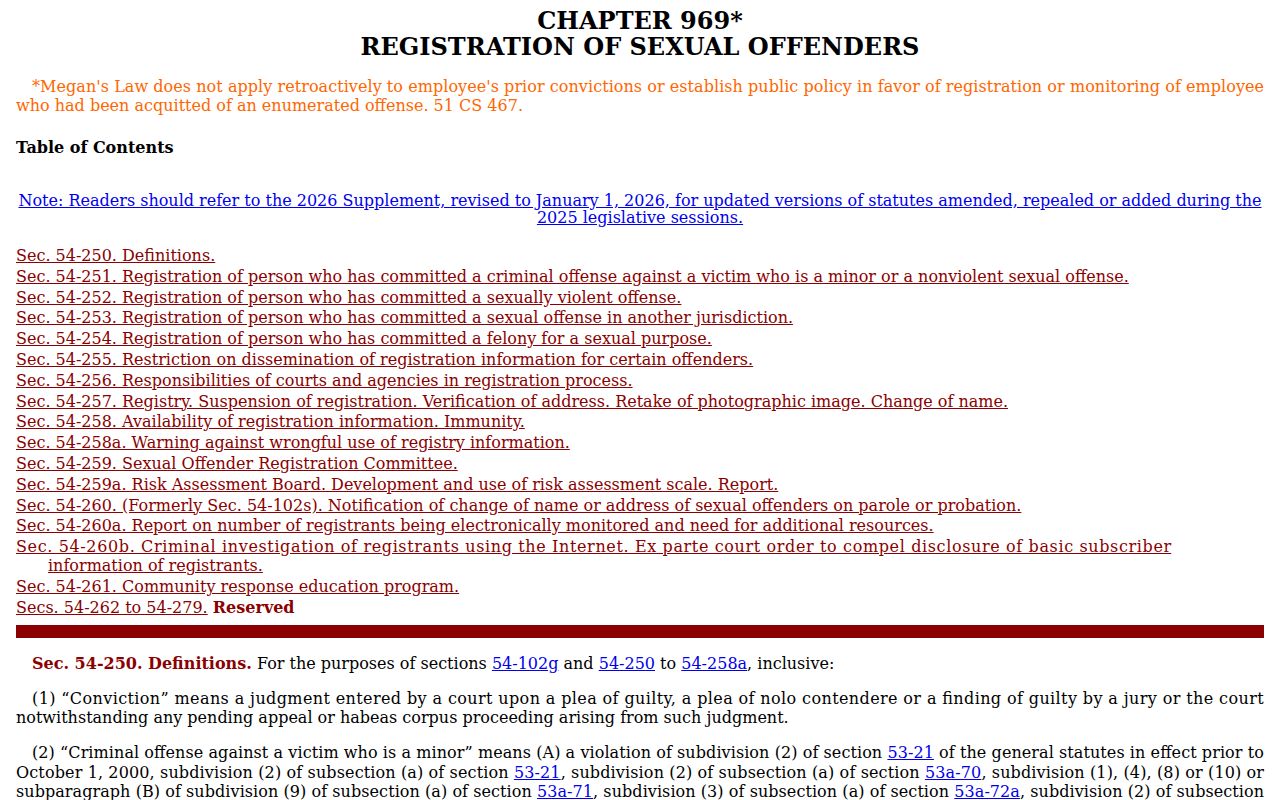
The statute is the sound source for duration, not an unsupported tier label.
The FBI's electronic Identity History Summary portal is a separate fingerprint-based record channel.
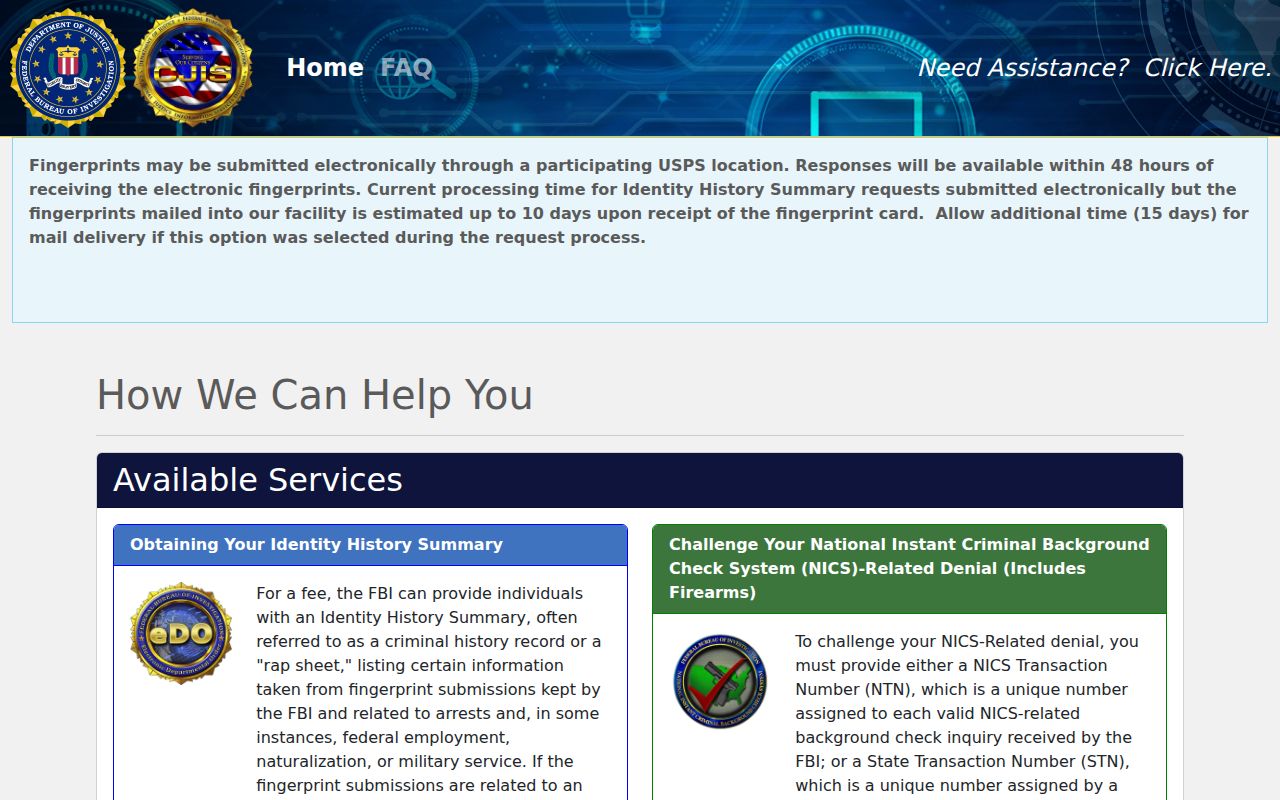
An FBI identity history is not the same product as a public registry profile.
Using Registry Information Lawfully
Registry information supports personal, family, and community safety awareness. Suspected noncompliance should go to DESPP or local police. Do not confront the person named in a result.
Misuse warning: DESPP warns that threatening, harassing, intimidating, or committing a crime against a registrant can lead to prosecution under Connecticut law.
Victim identity and treatment information cannot be disclosed under §54-258. Registrant email, instant-message, and Internet identifiers are also not public. Use official alerts and normal safety planning with any Hartford County result.
Registry research works best as one part of a broader safety plan. Check the places and routes that matter, use DESPP notifications where available, and discuss age-appropriate safety rules with family members. A public address may change, and not every person who poses a risk is subject to registration. The database cannot replace attention to conduct, secure routines, emergency contacts, and prompt reports to police.
The registry also should not be read as a map of crime rates. A larger number of profiles in one Hartford County municipality may reflect population, housing patterns, reporting rules, or lawful residence changes. It does not prove that one block is unsafe or that another is free from risk. Focus on verified profile facts and practical precautions.
Report Hartford County Noncompliance
Preserve the profile URL and note the search date, address concern, and reason a duty may not be met. Contact DESPP or the municipal police department with jurisdiction and let trained officials verify the facts.
Do not publish accusations or treat a mismatch as proof of a new crime. Address changes and system updates can lag. Official reporting protects safety and the integrity of any investigation.
The responsible police agency depends on the address. Hartford Police handles a Hartford location, New Britain Police handles a New Britain location, and West Hartford Police handles a West Hartford location. DESPP's Registry Unit remains the statewide registration authority. Give officials a concise account of what the public profile showed and what direct observation created concern. Avoid collecting private information or involving neighbors in an informal investigation.
A public profile can also be restricted by court order or law. Sections 54-255 and 54-258 protect certain information, especially when disclosure could identify a victim. An absent public profile can therefore have a legal explanation. Police and DESPP can distinguish a lawful restriction, a pending update, and actual noncompliance.